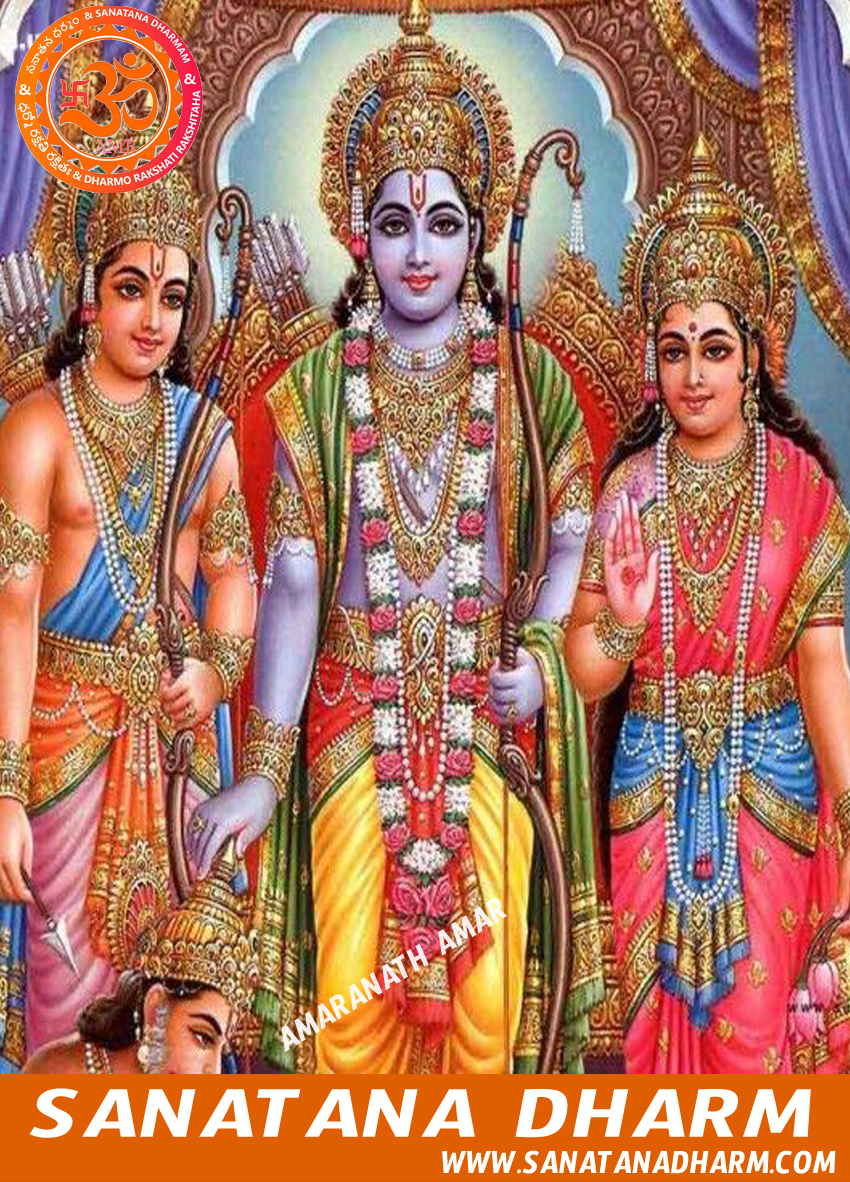
He who is well-versed in Veda-s, who is a gatherer of all scholars, riches and forces as well, a foreseer and a great resplendent one, also one who is esteemed by urbanites and countrymen alike, one who is a top-speeded chariot-warrior among the emperors of Ikshwaku kings, one who has performed many Vedic rituals, a virtuous one, a great controller, a saint-like kingly sage, one who he is renowned in all the three worlds, a mighty one with all his enemies eradicated, nevertheless who has friends, one who conquered all his senses, one who is similar to Indra, or Kubera on earth with his wealth, accumulations and other possessions, he that king Dasharatha while dwelling in the city of Ayodhya protected the world, like Manu, the foremost protector of mankind. [1-6-3,4,5]
अयोध्या नामक उस नगरी में, जो वेदों के ज्ञाता, सभी गुणों के संग्रहकर्ता, दूरदर्शी, महा तेजस्वी, प्रजाओं और नागरिकों के प्रिय थे। इक्ष्वाकु वंश के वे राजा, जो महान योद्धा, यज्ञ करने वाले, धर्मपरायण, इंद्रियों को वश में रखने वाले, महर्षि के समान और तीनों लोकों में विख्यात थे। वे बलवान, शत्रुओं का नाश करने वाले, मित्रों से युक्त, जितेंद्रिय और धन तथा अन्य संचयों से इंद्र और कुबेर के समान थे। जैसे महान तेजस्वी मनु लोक के रक्षक थे, वैसे ही राजा दशरथ भी लोक के रक्षक थे।
He that truth-abiding king, who adheres to the three-fold virtues rules the vast of that kingdom from that best city Ayodhya, as Indra rules heaven from his capital Amaravati. [1-6-5]
उस सत्यनिष्ठ राजा ने धर्म, अर्थ और काम का पालन करते हुए उस श्रेष्ठ नगरी की रक्षा की, जैसे इन्द्र ने अपनी अमरावती की रक्षा की हो।
In that best city Ayodhya all are exuberant yet virtuous ones, and scholars are variously learned ones, people are satisfied with their own riches, they have no greed, and they advocate truthfulness alone. [1-6-6]
उस नगर में धर्मात्मा, बहुश्रुत (विद्वान) लोग प्रसन्न थे। वे अपने धन से संतुष्ट, लोभरहित और सत्यवादी थे।
Bala Kanda – Sarga 6 · v4
नाल्पसंनिचयः कश्चिदासीत्तस्मिन्पुरोत्तमे |
कुटुंबी यो ह्यसिद्धार्थोऽगवाश्वधनधान्यवान् || १-६-७
None with meagre accumulations is there in that great city and no householder is there without unearned means, and without cows, horses, monies or cereals and who could not sustain his family. [1-6-7]
उस उत्तम नगर में कोई भी ऐसा गृहस्थ नहीं था जो धन, धान्य, गाय-बैल और घोड़ों से संपन्न न हो।
Bala Kanda – Sarga 6 · v5
कामी वा न कदर्यो वा नृशंसः पुरुषः क्वचित् |
द्रष्टुं शक्यमयोध्यायां नाविद्वान्न च नास्तिकः || १-६-८
None can see a lustful person, or a miser or a cruel one anywhere in that Ayodhya, along with nondescripts or non-believers, for there are no such persons. [1-6-8]
जो कामुक, कंजूस, निर्दयी, अज्ञानी या नास्तिक हो, ऐसे व्यक्ति को अयोध्या में कहीं भी देखना संभव नहीं है।
Bala Kanda – Sarga 6 · v6
सर्वे नराश्च नार्यश्च धर्मशीलाः सुसंयताः |
उदिताः शीलवृत्ताभ्यां महर्षय इवामलाः || १-६-९
All the ladies and gentlemen in that city are virtuous in mind, self-controlled ones, they are all self-satisfied like great saints, and both in their conduct and character they are blameless. [1-6-9]
सभी स्त्री-पुरुष धर्मपरायण, संयमी और सदाचार से युक्त होकर निर्मल महर्षियों के समान हैं। वे अपने चरित्र और आचरण से प्रकाशमान होते हैं।
In that city none is there without his earrings, headgear, or garlands, none is an enjoyer of lowly things, or misses his regular oil-baths, or with an un-creamed body with sandalwood paste or with other body cream, or with an un-perfumed physique. [1-6-10]
यह श्लोक कहता है कि बिना कुंडल (कान की बाली) के, बिना मुकुट के, बिना माला के, कम भोग-विलास वाला, बिना स्नान किए, बिना सुगंधित लेप लगाए और बिना अच्छी गंध वाला व्यक्ति भी विद्यमान है।
There is none who is famsihed, an uncharitable one in his nature, one with an undecorated body with ornaments like bracelets or chest plates, and there is none without a heart. [1-6-11]
जो भोजन करने के बाद हाथ नहीं धोता, जो दान नहीं करता, जो आभूषण नहीं पहनता, और जो आत्म-नियंत्रण नहीं रखता, वह कभी भी सुंदर नहीं दिखता।
Bala Kanda – Sarga 6 · v9
नानाहिताग्निर्नायज्वा न क्षुद्रो वा न तस्करः |
कश्चिदासीदयोध्यायां न चावृत्तो न संकरः || १-६-१२
There is none someone who is without sacrificial fires, and none without performing sacrificial rituals, and none is low in living; neither an immoral, nor a bastard nor even a thief, can be found in Ayodhya. [1-6-12]
अयोध्या में कोई भी ऐसा व्यक्ति नहीं था जो अग्निहोत्र न करता हो, यज्ञ न करता हो, नीच हो, चोर हो, या जिसने अपनी विद्या का त्याग कर दिया हो, या जो वर्णसंकर हो।
Bala Kanda – Sarga 6 · v10
स्वकर्मनिरता नित्यं ब्राह्मणा विजितेन्द्रियाः |
दानाध्यानशीलाश्च संयताश्च प्रतिग्रहे || १-६-१३
The sense-controlled scholarly Vedic Brahmans are always engaged in their rituals, and they donate the education of Vedas to their students, as well practice their own, and while receiving donations they are principle-minded. [1-6-13]
जो ब्राह्मण अपने कर्मों में लगे रहते हैं, जिन्होंने अपनी इंद्रियों को वश में कर लिया है, जो दान और ध्यान में लीन रहते हैं, और जो दान ग्रहण करने में संयम रखते हैं, वे श्रेष्ठ होते हैं।
Bala Kanda – Sarga 6 · v11
न नास्तिको नानृतको न कश्चिदबहुश्रुतः |
नासूयको न चाशक्तो नाविद्वान्विद्यते तदा || १-६-१४
There is no atheist, no liar, and none is less learnt in Veda-s, and no one is found to be jealous, or disabled, or unscholarly person. [1-6-14]
जो नास्तिक, झूठा, अल्पज्ञानी, ईर्ष्यालु, असमर्थ या अज्ञानी नहीं है, वह उस समय विद्यमान नहीं रहता
।
Bala Kanda – Sarga 6 · v12
नाषडङ्गविदत्रासीन्नाव्रतो नासहस्रदः |
न दीनः क्षिप्तचित्तो वा व्यथितो वापि कश्चन ||१-६-१५
None can be found anywhere in Ayodhya without the knowledge of the six ancillaries of Veda-s like astrology, prosody, grammar etc., none a non-performer of the prescribed rituals, and none a non-donor in thousands, thus none with a saddened heart, turmoil in mind or agonised in will is there. [1-6-15]
यह श्लोक बताता है कि कोई भी व्यक्ति ऐसा नहीं था जो छह अंगों (वेदों के) का ज्ञाता न हो, या जिसने व्रत न लिया हो, या जो निर्धन न हो, या जिसका मन विचलित हो, या जो दुखी हो। संक्षेप में, सभी सुखी, समृद्ध और ज्ञानी थे।
Bala Kanda – Sarga 6 · v13
कश्चिन्नरो वा नारी वा नाश्रीमान्नाप्यरूपवान् | द्रष्टुं शक्यमयोध्यायां नापि राजन्यभक्तिमान् || १-६-१६
Whoever it may be, either a gentleman or a lady, none is without wealth, even none without elegance or devoid of devotion to their king, and it is impossible to see suchlike person in Ayodhya. [1-6-16]
कोई भी पुरुष या स्त्री, चाहे वह धनवान हो या कुरूप, अयोध्या में राजा के प्रति भक्तिमान न हो, उसे देखा नहीं जा सकता।
In the four-caste system, from the first caste to the last, everyone is a worshipper of deities and guests and everyone is also faithful, illustrious, valiant, and each one is a brave one. [1-6-17]
वर्णों में श्रेष्ठ चार वर्णों के लोग देवताओं और अतिथियों का पूजन करते हैं। वे कृतज्ञ, उदार और पराक्रमी शूरवीर होते हैं।
Longevity is there for all of the people, all are with virtuosity and truthfulness, and they lived in that best city along with their sons, grandsons and their ladies. [1-6-18]
सभी मनुष्य, जो धर्म और सत्य का आश्रय लेते हैं, वे दीर्घायु होते हैं। वे अपने पुत्र-पौत्रों और पत्नियों के साथ उत्तम नगरों में सुखपूर्वक निवास करते हैं।
The warrior class Kshatriya-s is turned towards the Brahmans, the scholarly class, for intellectual and religious support. The trading class, Vaisya-s, is the follower of the Kshatriya-s, the ruling class, for the state's economy is dependent on the rulership. And the fourth one, Shuudra-s, the working class, while performing its own duties, is always working for the other castes. [1-6-19]
क्षत्रिय (योद्धा) ब्राह्मणों के मुख के समान थे, वैश्य क्षत्रियों का अनुसरण करते थे, और शूद्र अपने धर्म का पालन करते हुए इन तीनों वर्णों की सेवा करते थे।
Bala Kanda – Sarga 6 · v17
सा तेनेक्ष्वाकुनाथेन पुरी सुपरिरक्षिता |
यथा पुरस्तान्मनुना मानवेन्द्रेण धीमता || १-६-२०
That city is well protected by that king from Ikshwaku dynasty namely Dasharatha, like Manu, the foremost king of mankind in earlier times. [1-6-20]
वह इक्ष्वाकु के राजा दशरथ द्वारा भली-भाँति रक्षित नगरी, पूर्व में बुद्धिमान राजा मनु द्वारा रक्षित नगरी के समान थी।
Bala Kanda – Sarga 6 · v18
योधानामग्निकल्पानां पेशलानाममर्षिणाम् |
संपूर्णा कृतविद्यानां गुहा केसरिणामिव || १-६-२१
That city Ayodhya is replete with firebrand like skillful warriors that are intolerant of insults, and who have prosecuted their education in archery, chariot-wars, swordplay etc. and with them it is like a cave replete with lions. [1-6-21]
योद्धाओं के लिए, जो अग्नि के समान हैं, कुशल हैं, क्रोधित हैं, और जिन्होंने पूर्ण विद्या प्राप्त की है, वे गुफा में रहने वाले सिंहों के समान हैं।
Bala Kanda – Sarga 6 · v19
कांभोजविषये जातैर्बाह्लीकैश्च हयोत्तमैः |
वनायुजैर्नदीजैश्च पूर्णा हरिहयोत्तमैः || १-६-२२
That city is full with best horses born in countries like Kaambhoja, Baahlika, Vanaayu, and also in river-bed counties, which are like the horse of Indra namely ucChaishrava. [1-6-22]
यहाँ संस्कृत श्लोक का सरल हिंदी अनुवाद दिया गया है: कंबोज देश में उत्पन्न हुए श्रेष्ठ घोड़ों और बाह्लिक देश के उत्तम घोड़ों से, साथ ही वनायुज (वन में रहने वाले) और नदीज (नदी में रहने वाले) श्रेष्ठ घोड़ों से, वह स्थान पूर्ण था।
Bala Kanda – Sarga 6 · v20
विंध्यपर्वतजैर्मत्तैः पूर्णा हैमवतैरपि |
मदान्वितैरतिबलैर्मातङ्गैः पर्वतोपमैः || १-६-२३
Born in Vindhya Mountains, and also from Himalayan regions, mighty are the elephants fully vigorous and fattened ones, and most powerful in their strength and each in similitude is a huge mountain. [1-6-23]
विंध्य पर्वत के मदमस्त, बलवान और पर्वत के समान विशाल हाथियों से, जो कि हिमवान पर्वत के भी हाथी हैं, सब दिशाएँ भर गई हैं।
Bala Kanda – Sarga 6 · v21
ऐरावतकुलीनैश्च महापद्मकुलैस्तथा |
अंजनादपि निष्क्रान्तैः वामनादपि च द्विपैः || १-६-२४
High bred from the classes of Airavata, the Elephant of Lord Indra, and from Mahapadma, Anjana and Vamana, too...are the elephants [of that city] [1-6-24]
ऐरावत, महापद्म और अंजना जैसे प्रसिद्ध हाथियों के वंशजों से उत्पन्न हुए, तथा वामन नामक हाथी से भी निकले हुए।
That city is always full with vigorous and mountain like elephants bred mainly from three classes viz., Bhadra, Mandra and Mriga. And inter-bred among these three main classes are Bhadra-Mandra, Mandra-Mriga, Bhadra-Mriga and the like. [1-6-25]
यह श्लोक बताता है कि वह नगरी हमेशा मदमस्त हाथियों से भरी रहती थी, जो पर्वतों के समान विशाल और स्थिर थे। इन हाथियों के मदमस्त स्वर और चाल से वह नगरी शोभायमान रहती थी।
Bala Kanda – Sarga 6 · v23
सा योजने च द्वे भूयः सत्यनामा प्रकाशते | यस्यां दशरथो राजा वसन् जगदपालयत् || १-६-२६
While residing in which city King Dasharatha ruled the world that city is further fortified up to two more yojana-s outside city, true to its name a yodhya , an un-assailable one. [1-6-26]
यह श्लोक कहता है कि जिस अयोध्या नगरी में राजा दशरथ निवास करते थे और जिसने संसार का पालन किया, वह नगरी दो योजन लम्बी और चौड़ी होकर सत्यनाम से प्रकाशित होती थी।
Bala Kanda – Sarga 6 · v24
तां पुरीं स महातेजा राजा दशरथो महान् |
शशास शमितामित्रो नक्षत्राणीव चन्द्रमाः ||१-६-२७
In which city the great resplendent and admirable king Dasharatha resided, he ruled the world from that city with silenced enemies, like the moon governing the stars. [1-6-27]
वह महान तेजस्वी राजा दशरथ, जिन्होंने शत्रुओं को शांत कर दिया था, उस अयोध्यापुरी पर ऐसे शासन करते थे, जैसे चंद्रमा नक्षत्रों पर शासन करता है।
With gorgeous arches, castle-door-bars and with amazingly built houses that city is magnificent and auspicious one, and full with thousands of provincial kings too, and king Dasharatha, a coequal of Indra, indeed ruled that city which is true to its name. [1-6-28]
अयोध्यापुरी, जो सत्य से युक्त, दृढ़ द्वारों और तोरणों से सुशोभित, विचित्र घरों से अलंकृत और मंगलमयी थी, तथा जहाँ हज़ारों मनुष्य निवास करते थे, उस पर इंद्र के समान पराक्रमी राजा ने शासन किया।